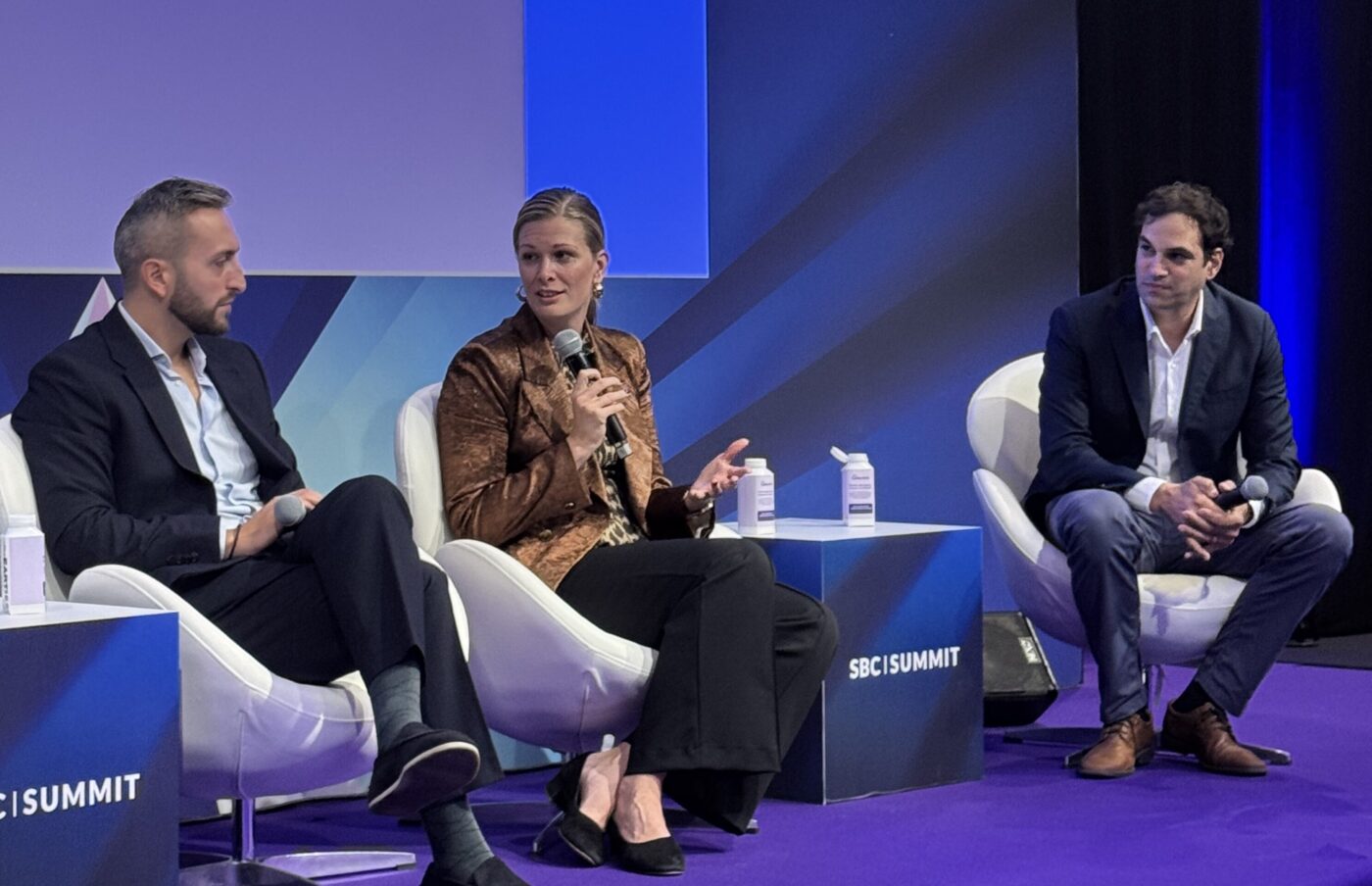
Is “invisible KYC” achievable, or just another industry fantasy? At SBC Summit in Lisbon, our Director of Product – Core Experience, Charlotta Shelbourg, joined a panel on exactly that question. Her view: invisible KYC doesn’t mean fewer checks, it means spreading them smartly across the player journey, so that KYC builds trust in the brand instead of becoming a reason to leave.
We caught up with her afterwards on smarter data use, where AI should (and shouldn’t) make the call, and why 2027 could be a turning point for the industry.
What’s the one thing you’d want people who missed the panel to take away?
As an industry, we’ve given KYC a bad name. It’s certainly not the reason customers come to our sites, but it doesn’t have to be a deterrent. Done well, KYC can add value to our brands and build trust with our players.
Which risks really need to be addressed – and what’s the minimum information you need to assess them?
First and foremost, we have to make sure no minors are using our products. At a minimum, that means reliable age and identity verification up front, with additional checks only when risk indicators call for them.
Youth gambling is deeply worrying, and I believe black market operators are the main driver of it. Tighter restrictions on licensed operators, without effective blocking of unlicensed ones, push players, including young people, toward sites with no protections at all.
How do you protect players without overstepping on their privacy?
We should ask only for the data we need, when we need it, and not keep or extract anything that isn’t relevant to that purpose. At the same time, if a customer has already given us information we’ll need later, we should verify it then and there. For example, if we ask for proof of income and receive a bank statement that also shows an address, we should verify the address at the same time, so we don’t have to ask again. That’s what smarter KYC looks like.
Does ‘invisible KYC’ mean fewer checks?
Not at all. The checks still happen. Invisible KYC means spreading the friction smartly across the customer journey, so that KYC builds trust in the brand rather than becoming a reason for customers to leave.
Where should AI make the call – and where should a human step in?
AI should handle the straightforward cases. It could make tasks such as name matching on documents much more accurate, and it’s well suited to behavioural detection and anything that involves processing large amounts of data. In sensitive or complex cases, though, a human should always be involved, so that the final decision is right for both the customer and the company.
Player or regulator – who are you really designing for?
Both, and that’s the challenge. Operators often take the blame when regulation isn’t focused on actually protecting players, so we end up carrying more of the responsibility than we arguably should.
Too often, the industry designs for the regulator rather than the customer, and you can see it in some customer journeys across regulated markets. We need to get better at designing for both. That also means working with regulators to show which measures actually protect players and which only add unnecessary friction.
Looking ahead to 2027, what do you see on the KYC horizon? Which changes, whether in regulation, technology or customer expectations, do you think will shape the industry the most?
AI is the obvious one, but it’s a double-edged sword: it enables fraudsters to generate fake documents and deepfakes faster and cheaper, while simultaneously helping compliance teams analyze larger datasets to target real risks.
That’s why I believe the true game-changer in 2027 is the convergence of the EU AML Regulation and the EUDI wallet. Come July 2027, the EU will share a unified AML rulebook, with the EUDI wallet providing a standardized, secure way for users to comply. If all regulators enforce aligned KYC requirements, level the playing field for operators, KYC will shift from a point of friction into a signal of trust. It would also make spot-checking unlicensed sites far more intuitive for consumers.”