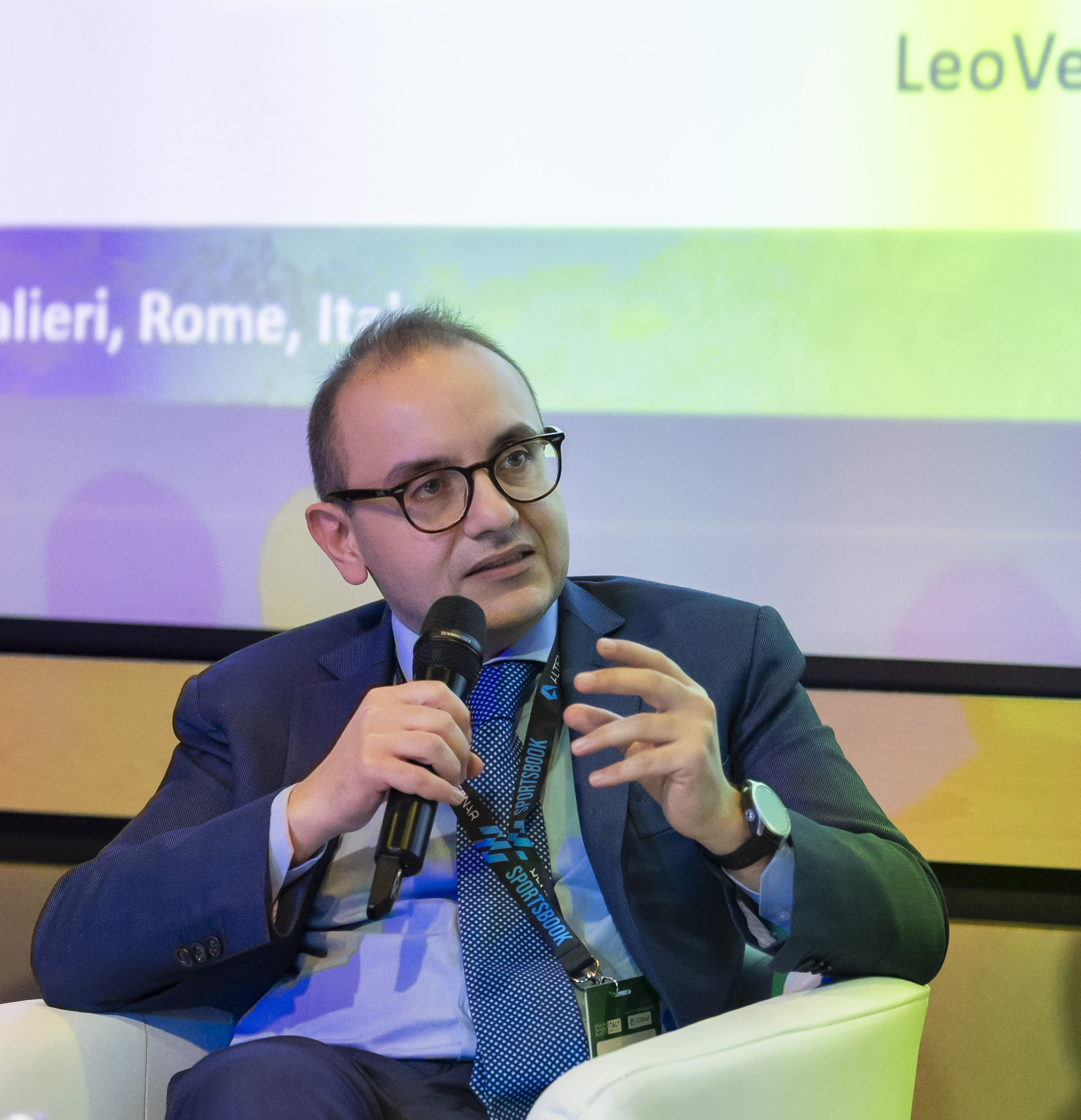
Carmine Giordano, Country Director Italy at LeoVegas Group, recently spoke at EGR.Global’s EGR Italy Briefing 2025. Following the event, where LeoVegas was proudly crowned Italy’s “Casino Operator of the Year” at the prestigious EGR Italy Awards 2025, we took the opportunity to speak with Carmine about the highly competitive Italian market and the factors that will define successful operators in the future. Don’t miss his insights!
In a mature and competitive market like Italy, how important is brand differentiation, and which values matter most when building long-term loyalty?
“In a market as mature and competitive as Italy, brand differentiation is key to drive success. When products and promotions tend to converge, the brand becomes the primary way to create emotional connection and long-term loyalty with our players.
Despite the advertising ban, we’ve succeeded in positioning LeoVegas clearly as the mobile-first casino brand, where players consistently find the most rewarding and personalized CRM experience. Our strategy of leveraging secondary brands (non-igaming included), from LeoVegas.News to LeoVegas Play, helps reinforce the association between the word Leo and the best, most seamless gaming experience available.
With LeoVegas.News, our sports-focused news platform, we have historically invested in sports sponsorships aimed at reaching a broader audience through engaging social creators and in-stadium experiences, using sports-entertainment storytelling to drive engagement.
With LeoVegas Play, we offer a fast, mobile-first free-to-play gaming experience designed for the Italian market, delivering an innovative arcade-style experience to players.
In this environment, values such as trust, transparency, entertainment quality, and ease of use matter far more than traditional marketing strategies.
Players stay loyal when they feel your brand promises something specific, and then delivers on that promise every time.”

LeoVegas was recently crowned “Casino Operator of the Year” at EGR Italy Awards.
Have regulatory changes, including advertising restrictions, strengthened or weakened innovation and sustainability in the market?
“Perhaps paradoxically, stricter regulation has accelerated innovation. When traditional marketing campaigns are restricted, you’re forced to reinvent the way you communicate and add value.
For us, this has meant creating new campaign formats, new game concepts, and even new “free-to-engage” experiences that keep players entertained and loyal without relying on heavy advertising exposure.
Regulation pushes operators to be more disciplined, more creative, and more sustainable, because growth must come from quality of product and experience, not from simply outspending the competition.”
Are we seeing a shift from pure performance marketing toward broader models built on user experience, and entertainment
“Absolutely, there’s a clear shift toward experience-driven marketing. Acquisition and retention can no longer be treated as two separate silos; they influence each other from the very first touchpoint. We’re moving into a 360 degrees marketing model, where we’re scientific in optimizing CPA and targeting, but equally scientific, and creative, in how we retain and entertain players. Performance marketing still matters, but it’s no longer enough on its own.
Operators win when they make the entire player journey, from logging in to logging out, seamless and rewarding.”
How has the marketing mix evolved in recent years, and what role do data-driven strategies, community building, and AI now play in acquisition and retention?
“Working in a digital environment means that data sits at the foundation of every winning strategy. Better insights lead to faster optimisation, smarter channel allocation and far more efficient use of bonus spend.
In recent years, we have also seen the growth of community-driven engagement, which is becoming increasingly important in a regulated ecosystem where operators must build loyalty without relying on traditional advertising. Examples include seasonal gamification ecosystems inside the product experience. For instance, operators across Italy are creating multi-week “quest” frameworks where players complete missions tied to different games or categories. These missions are not just individual tasks; they contribute to shared community progress, unlocking collective milestones or rewards when the entire player base reaches certain thresholds. Another one, can be the value of creating community pages on the site to show live events companies run and to show that, behind a brand, there are people and ultimately a community.
AI is still in its early stages, but already it helps us optimize customer flows, personalise CRM journeys and identify behavioural patterns that enhance both acquisition and retention. From a responsible gaming perspective, it can also help identify players who may be at risk at a very early stage of their player lifecycle. That said, human expertise remains essential, particularly in a vertical as specialised and highly regulated as gaming.”
What are the most effective ways for operators to attract and engage new audiences without sacrificing responsible gaming principles?
“Today’s audiences are attracted to brands they trust. The era of oversized welcome offers and traditional gambling campaigns is over, especially in Italy.
Players respond to operators that are transparent, entertainment-focused, and willing to make responsible gaming a core part of their brand identity rather than an afterthought.
We recently launched our Safe Play commercial in Italy, and the positive response reinforces our belief that informing players about responsible gaming tools builds both trust and long-term value. We introduced the character “Nonno Leo” (Grandfather Leo) to communicate safe-play messages through a familiar figure who embodies wisdom and trusted guidance within the family. Responsibility is not a limitation, it is a strength.”
Looking ahead, what factors will define successful operators in the future?
“The million-euro question! Jokes aside, success will hinge on one thing above all: retaining players better than the competition.
That means building smarter gamification, offering the right games before anyone else, and ensuring that every part of the experience, from UX to CRM to customer support, feels intuitive, and trustworthy.
Operators who combine innovation, responsibility, and long-term entertainment value will be the ones who thrive.”